ServicesPanel Cleaning
Solar Panel Cleaning in Allen
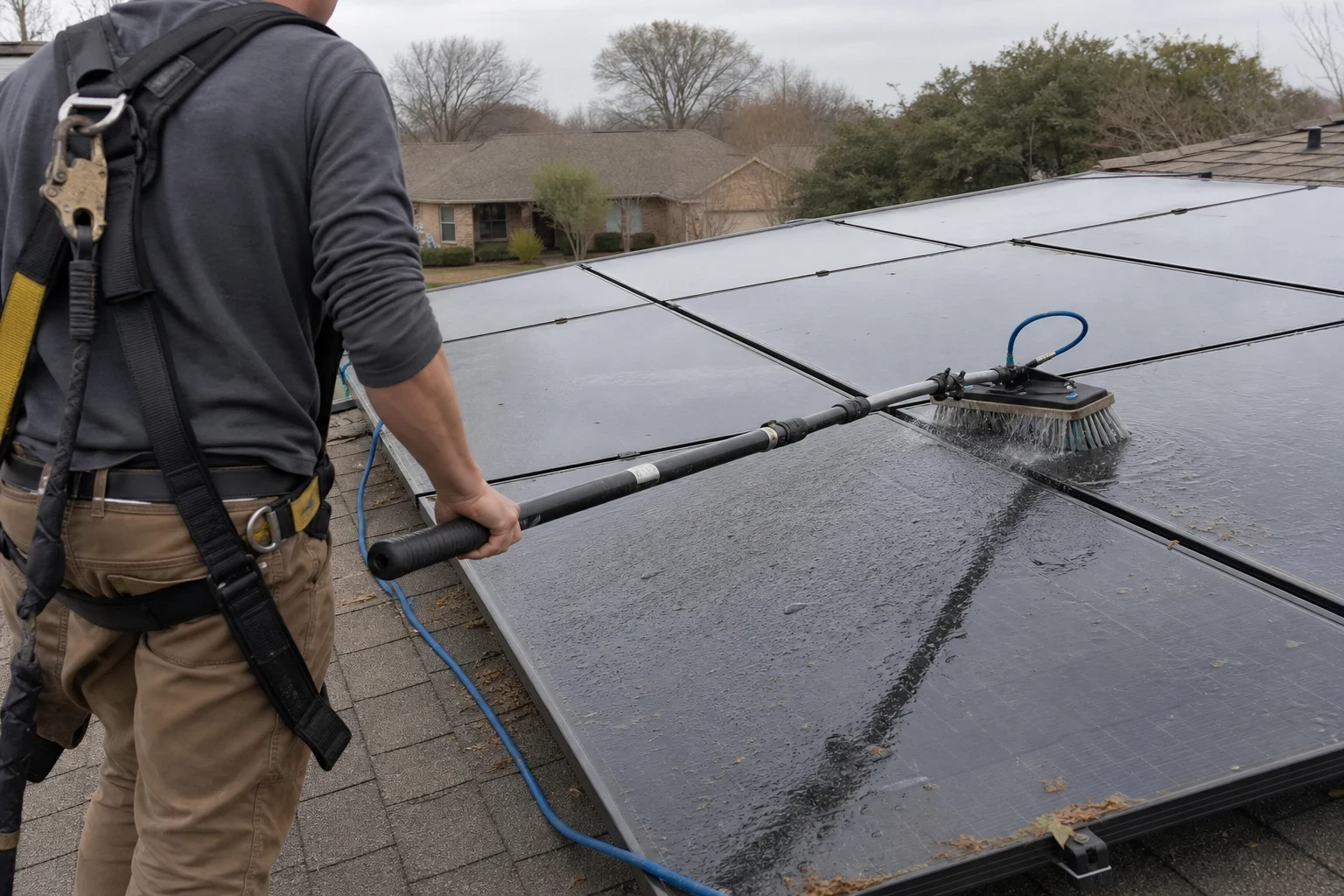
Dirty glass makes less power. We clean your panels by hand with soft brushes and purified water, work carefully around older shingles and past repairs, and tell you plainly if we spot anything on your system that needs a closer look.
When a cleaning is the right call
Solar panels shed some dirt on their own when it rains, but not all of it. Dust, spring pollen and bird droppings build up in a film that rain mostly smears around. That film blocks sunlight, and the loss adds up quietly over months on your monitoring app.
A cleaning makes sense when your production has slipped and nothing else explains it, when you can see a haze or spots on the glass from the ground, or once or twice a year as routine care. If the numbers stay low after a cleaning, that points to a different problem, and we will say so instead of selling you another visit.
Older homes need a gentler hand. Shingles that have seen many Texas summers get brittle, and roofs often carry patches from earlier repairs around vents and mounts. We plan every cleaning around what your roof can safely take.
What your panel cleaning includes
- Hand washing with purified water
- We use soft-bristle brushes and deionized water, which dries without leaving the mineral spots that tap water does. No pressure washers and no harsh soaps, since both can damage the anti-reflective coating and push water past seals.
- A roof check before anyone steps up
- We look over the shingles, the mounts and any old patches from the ground and the ladder. Fragile spots get marked so we keep our weight off them.
- Clearing the frames and edges
- Leaves, twigs and packed dirt along the bottom edge of each panel come out by hand. That lets water drain off the glass instead of pooling against the frame.
- A visual look at your equipment
- While we are up there, we watch for cracked glass, loose or sagging wires, worn sealant around mounts and signs of critters nesting under the array. We do not take anything apart during a cleaning.
- Before-and-after photos
- You get pictures of your panels before and after, plus close-ups of anything that caught our eye. It is the easiest way to see what was on your roof without climbing up yourself.
How to tell your panels need a wash
Output is down and nothing explains it
When this month's production trails the same month last year under similar weather, grime on the glass is one of the first causes to check.
The glass looks hazy or streaked from the ground
A dull gray coating, or streaks running down to the bottom edge of each panel, shows dirt collecting where rain leaves it behind.
Droppings on the panels
A single bird dropping can shade a cluster of cells. On some systems that small spot drags down a whole string, so it pays to remove it.
Pollen or dust season is over
Spring pollen and dry summer dust form a tacky coating that a light shower won't rinse away.
Debris piled at the panel edges
Leaves and dirt that gather along the lower edge trap moisture against the glass and can keep water from draining under the panels.
How cleaning day runs
- 1
A quick talk by phone
We ask about your system's age, your roof and anything you have noticed in your production. That tells us what equipment to bring and how to approach your roof.
- 2
A look before we start
We check the roof surface, the mounts and any old patches from the ground and the ladder first. If a spot looks too fragile to step on, we work around it with extension poles.
- 3
Early, careful washing
We clean in the cooler morning hours, because cold water on hot glass can stress it and fast drying leaves streaks. Each panel is rinsed, gently brushed and rinsed again.
- 4
Wrap-up and photos
We walk you through before-and-after photos and point out anything we noticed, such as a cracked panel, loose wiring or worn sealant. Your yard is left as we found it.
What affects the price of a cleaning
No two systems sit on quite the same roof, so we set the price once we have heard about yours. You get the figure on the phone before anything goes on the calendar. If you want something extra handled while we are there, we talk it over with you first rather than adding it to the bill.
- Number of panels
- More panels means more time on the roof. A large array takes longer than a small one on a garage or porch.
- How tall and sloped your roof is
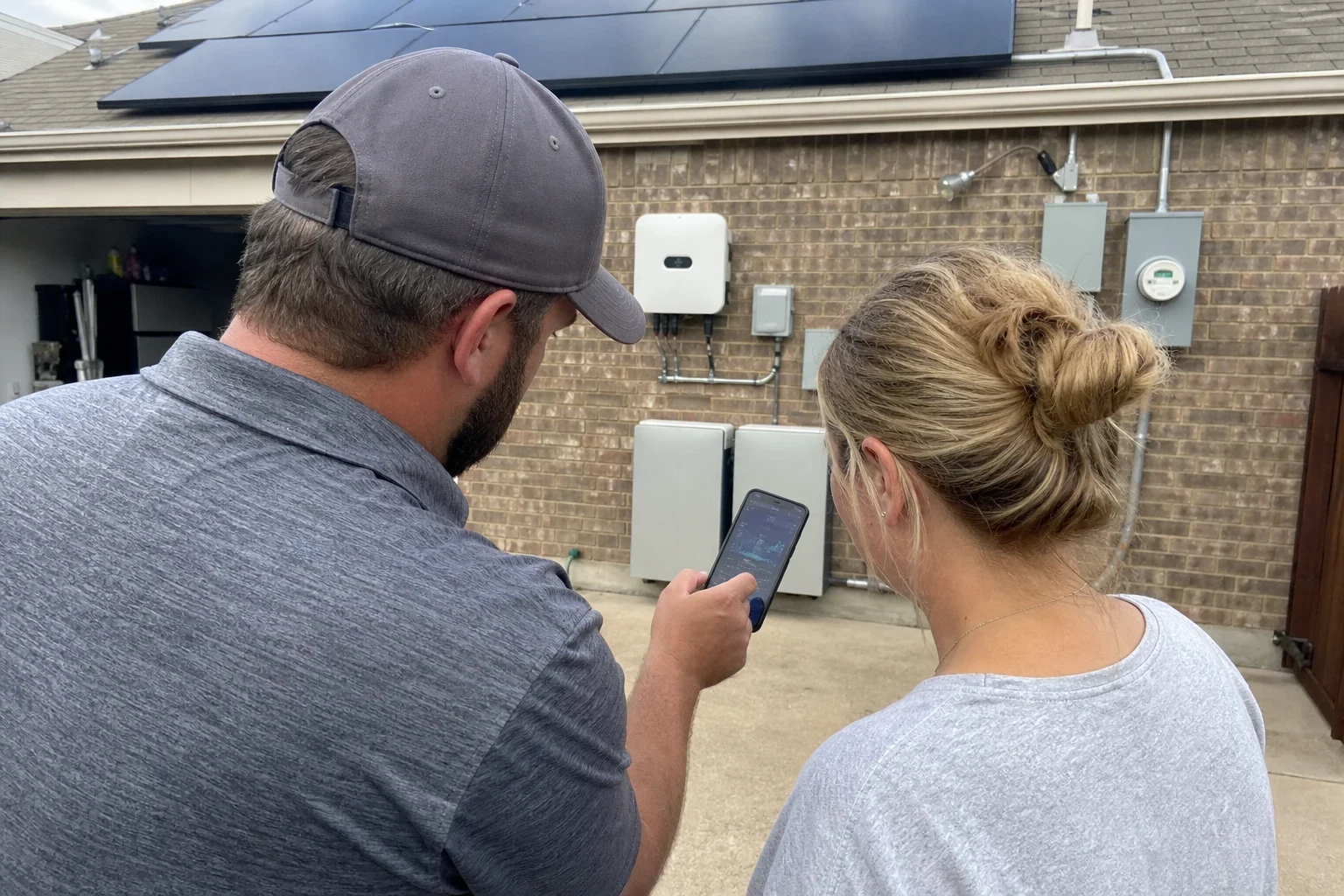
- A sharp slope or a second story calls for extra anchors, harness work and ladder setup before washing begins. Once we are up, we also move more slowly. A low, gently sloped roof goes faster.
- How much buildup there is
- Panels that have gone years without a wash, or that carry baked-on droppings, take extra passes to clean without scratching.
- Condition of an older roof
- Brittle shingles or past repairs mean we move carefully and use poles from safe footing, which can add time.
Panel cleaning questions
Something not covered here? (972) 636-4883
Can't I just hose my panels off myself?
You can rinse lower panels from the ground with a garden hose, and that helps with loose dust. Tap water tends to leave mineral spots, though, and it will not lift stuck-on film or droppings. We would also ask you not to climb onto the roof, especially an older one, since a fall is a much bigger problem than a dusty panel.
How often should my panels be cleaned?
Most systems around here do well with a wash once or twice a year. A lot of our neighbors book one after the spring pollen settles and another as summer winds down. Panels under trees, or on a roof the birds have claimed, can need a visit a little more often.
Will cleaning hurt my older roof?
We plan the work so it does not. We check the roof before stepping on it, keep our weight off soft or patched areas, and use extension poles where footing is questionable. If we see shingle damage, we take photos and let you know, so you can have it looked at.
What if you find a problem with my system?
We tell you what we saw and show you the photos. Cracked glass, damaged wiring or a failed connector is work for our solar repair service, and we will explain what it would involve before anything is scheduled.
Will cleaning definitely raise my production?
If dirt was the cause of the drop, you should see output come back in the following days. If it does not, the cause is likely a failing inverter, a shaded string or a wiring issue, and we will be honest about that.
Ready for clearer panels?
Tell us about your system and your roof, and we will give you a price and pick a morning that works for you.